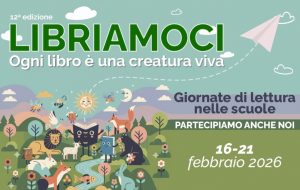
LIBRIAMOCI
Reading Days in Schools
The readings will take place from 16 to 20 February 2026
at the
Department of Romance and Germanic Studies
Faculty of Arts
Constantine the Philosopher University in Nitra
Štefánikova 67
949 01 Nitra
♦
Fabiano Gritti
reads
Giovanni Catelli
Excerpts from the collections Lontananze and Geografie
[Distances and Geographies]
Gabriella Ghermandi
Regina di fiori e di perle
[Queen of Flowers and Pearls]
Giovanni Pascoli
Gelsomino notturno
[Night Jasmine]
X agosto
[10 August]
Igiaba Scego
La mia casa è dove sono
[My Home Is Where I Am]
Cassandra a Mogadiscio
[Cassandra in Mogadishu]
♦
Mirta Curkovic
reads
Italo Calvino
Tutto in un punto, from Le Cosmicomiche
[All in One Point, from Cosmicomics]
Claudio Magris
Un altro mare, Chapter I
[Another Sea, Chapter I]
Eugenio Montale
Ossi di seppia
[Cuttlefish Bones]
Vasco Pratolini
Cronaca familiare, Part I
[Family Chronicle, Part I]
♦
The return to narrativity, understood as the informal transmission of literary “pills” of wisdom, enables younger generations—regardless of the labels attributed to them—to rediscover their sense of belonging and to recognize themselves in the life, artistic, or imaginative experiences of preceding generations. Despite their many limitations, social networks have fostered and disseminated a closer relationship with the written word, both in reception and production, albeit often in a concise and superficial form. However, approaching literature helps overcome these limitations. In this context, an informal approach to reading enables experiential and cognitive enrichment that promotes the reception of artistic writing and stimulates, if not creative activity itself, certainly the capacity for a deeper engagement with the text, its specific features, and its most diverse nuances of meaning.
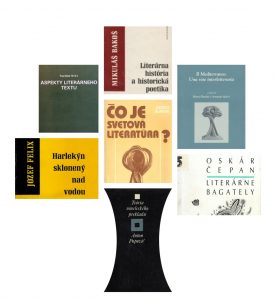
The discussion will direct the audience’s attention—rather than toward a formal analysis of the text—toward its expressive qualities and the ways in which they are shaped by the author. The theoretical framework for this reflection is based on the approach developed by the Slovak scholar František Miko.
This initiative is supported by the project APVV-23-0586 Critical Reflection on Slovak Literary-Scholarly and Translatological Research in the Context of Western European Tradition and the Contemporary State of the Humanities, funded by the Slovak Research and Development Agency (APVV).
 |
 |
 |
 |
 |
 |
 |